Four hours. Facilitated. Then permission to stop.
We built a room so the workday has somewhere to end. A four-hour facilitated container in Observatory, Cape Town — for when the work-from-home setup has stopped working, and the workday has stopped ending.
Questions before you book? hello@nd-agency.co.za
You went freelance for the freedom. The freedom is eating you alive. The day bleeds into evening. The week bleeds into the weekend. You "work" for ten hours and produce three.
You've tried the workarounds. You hold it together at a café for forty minutes. At a coworking space for a week. On a new productivity app for ten days. Then it stops working. Again. You know more about your brain than any of the systems you've bought to manage it — and none of them tell you when enough is enough.
And every time something stops working, it costs you more than the system. Intention → disappointment → self-criticism. Over time it erodes something precious: your trust in yourself. The guilt follows you everywhere. Another evening wondering why you can't just do the thing.
The problem isn't motivation. The problem is that nobody is in the room when you can't start, and nobody tells you when you're done.
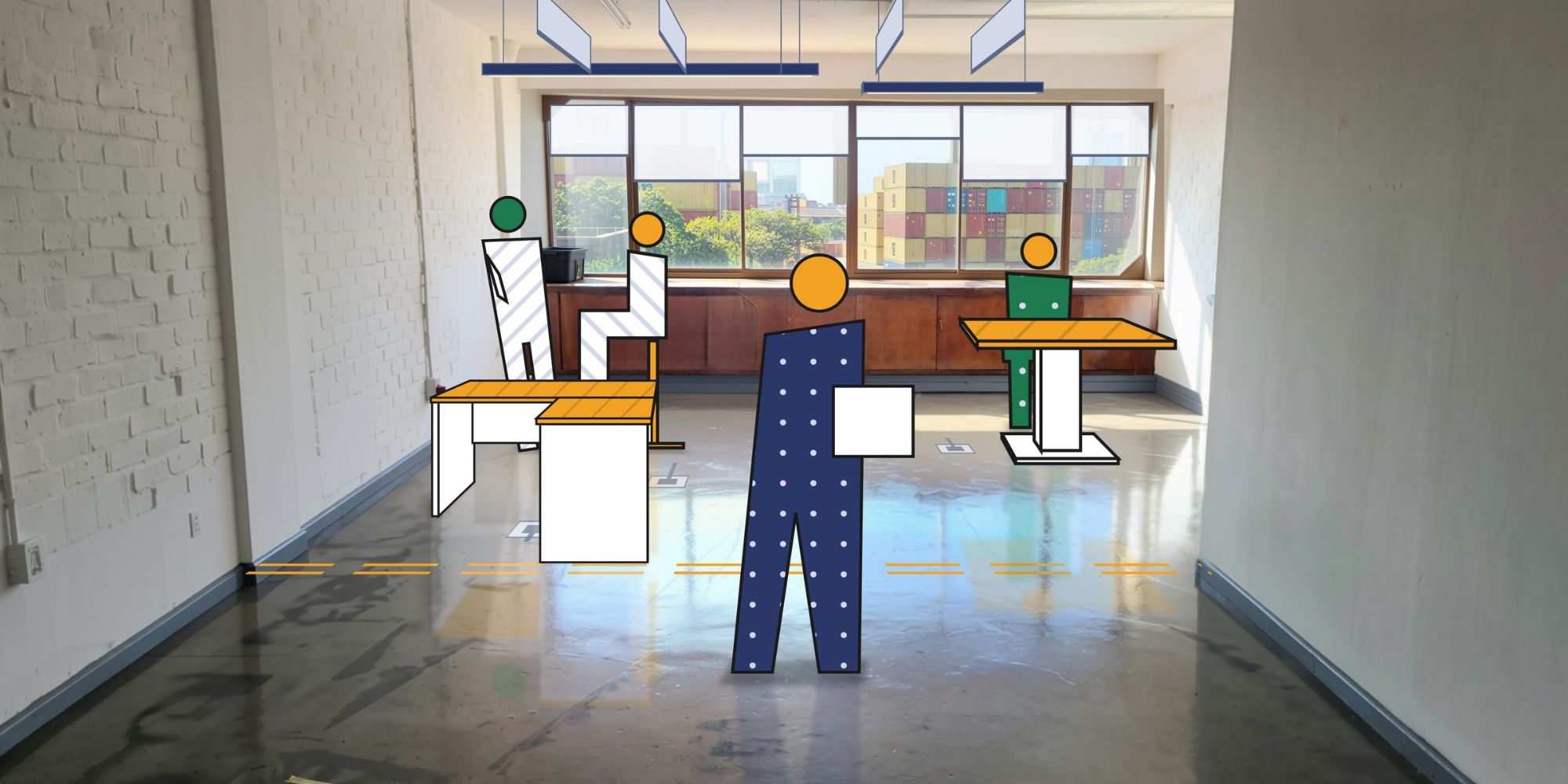
The session — Tuesday, Wednesday, Thursday or Friday morning. You arrive at 8:30. There are 4 to 6 of you in the room.
You name the one thing you came here to move forward. Out loud, briefly. The facilitator notes it. Saying it externalises it; the facilitator is now also holding it.
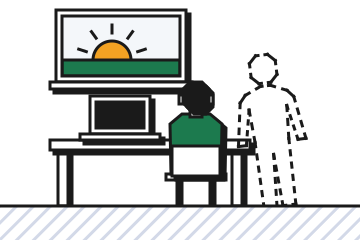
You start. If you don't start, the facilitator notices and intervenes — not with motivation, with a question that gets the next concrete action out of your head. This is the part most apps and coworking spaces cannot do.
Stand up. Move. Drink water. The break is built into the schedule. Five minutes off doesn't cost you twenty-five getting back in.
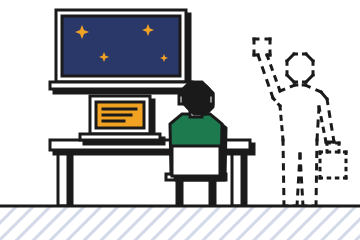
Deeper work. The facilitator is watching for drift, stuckness, and the moment you decide quietly that you're done for the day at hour 2. They will check in. You can keep going or you can stop honestly.
You name what you moved. The facilitator confirms it. The session ends. The workday ends with it. No "I should do more" homework. No guilt commute home. You did the job — the job was four hours of facilitated focus. Go live your life.
You are not buying a desk. You are buying four hours of facilitated focus.
A defined start, a real-time human watching for the moments your brain quietly leaves the building, and a defined end that grants permission to stop.
Single session
R550
Four hours. Facilitated. In person. Your choice of morning. Try it once before committing to a block.
Reserve a spotWorkcase — two weeks
R3,000
Six sessions with a defined start date, end date, and deadline structure built in. Paid upfront. The commitment is the container.
Reserve the workcaseCompare honestly —
| ND Agency — per session | R550 / session (4 hours, facilitated, in person) |
| ND Agency — workcase | R3,000 / 6 sessions (two-week container) |
| ADHD coaches | R500–1,500 / hour (weekly, on Zoom, alone in your flat afterwards) |
| Virtual body-doubling | R1,000–1,800 / month (alone in your flat the whole time) |
| Coworking space | R2,000–4,000 / month (no facilitation, no container, no end) |
For this audience, reduced ambiguity is part of the service. Here's what the room is actually like.
4 to 6 people per session. Always. Small enough to feel contained. Not a shared office with strangers.
No networking. No performative check-ins. Social pressure is low by design. You don't have to perform being productive.
Headphones are normal. Breaks are built in. Regulation needs aren't a problem to manage away — they're accounted for in the structure.
The session closes deliberately. You don't stop because you crashed or ran out of shame. You stop because the container ended — and it says so out loud.
We don't promise you a perfect workday.
What we promise is that you will get more done here, on a bad day, than you would have got done alone — and that you'll leave with clarity about what was actually in the way, instead of another evening spent wondering why you can't just do the thing. That's what you're paying for: less variance, not guaranteed output.
The workday ends with the session. That is the product.
Cafés lasted forty minutes. Coworking spaces, about a week. Every productivity system worked until it didn't. I spent years collecting evidence about how my brain actually operates — and none of the places I tried were designed with that evidence in mind.
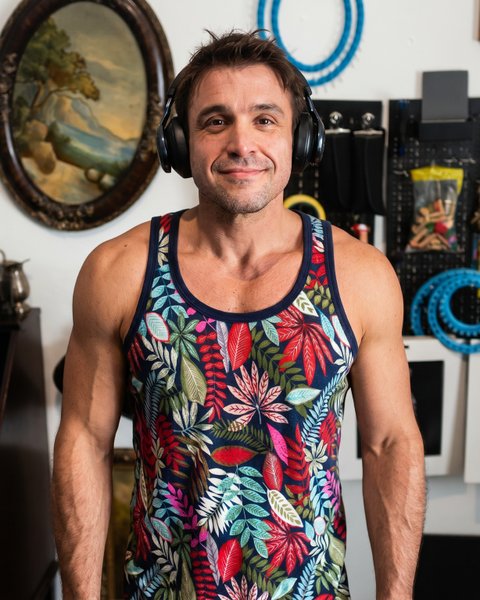
I'm Bryce Hepburn — facilitator, instructional designer, and the person who built the four-hour container model.
I have an MBA, an MSc in Psychology, and 20-odd years of designing how people learn and work. I also have AuDHD, which means I spent most of those years building productivity systems without knowing why I needed them so badly.
The ND Agency exists because I needed it to. The container model didn't come from theory — it came from pattern-matching what actually holds on a bad brain day versus what falls apart.
12 Bellevliet Rd, Observatory, Cape Town
Morning sessions, Tuesday through Friday. 8:30 to 12:30.
Bryce Hepburn — facilitator and designer. More in § 06.
4 to 6 people per session. Always.
Quiet enough to work. Structured enough to hold you. Low pressure to perform socially.
People who need external structure without being managed like children.
Ten first-cohort spots are R450 per session. After that, sessions are R550.
You don't need to be certain. You just need to be curious enough to find out whether the room works for you. Here's exactly what happens after you reach out.
Send an email with your name, the kind of work you'd be bringing to the room, and which morning of the week suits you. That's the whole application.
A short conversation — around ten minutes — to check fit and answer your questions. Then a booking confirmation with clear information about timing, what to bring, and what to expect on the day.
You watch how your brain actually works — what you observe, not what a label says. Then you teach an AI assistant those patterns so it does the thing no app does: notices you're stuck, asks what's next, and tells you when to stop.
Four modules at your own pace. You finish with a system that runs, not a theory that sounds good. Built jointly with Andrew Wolhuter (The ONmedia Collective).